Finally a good night’s sleep
21. June 2021 | Categories
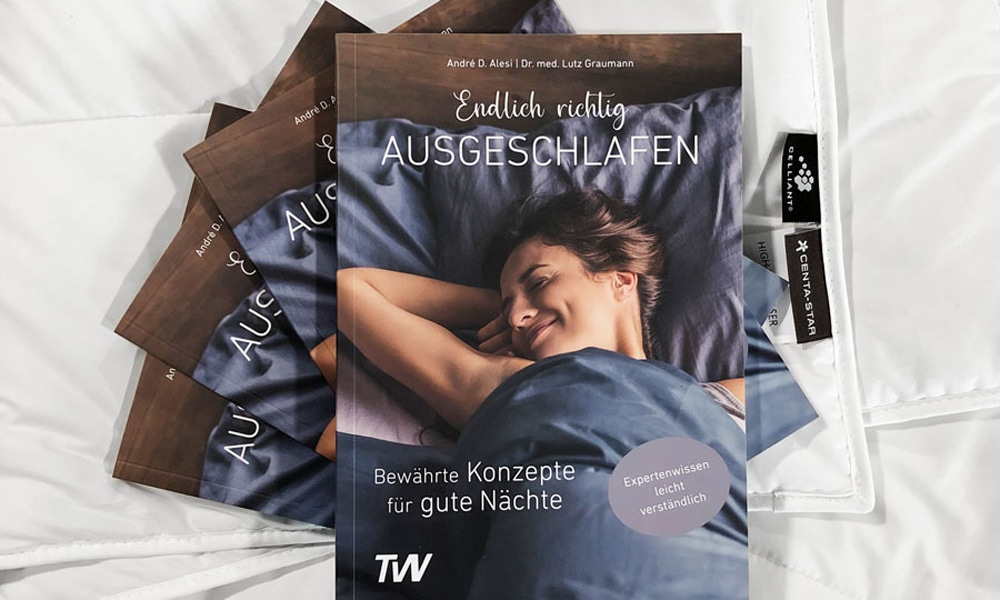
A guest article by Dr. Lutz Graumann and André Alesi
Being fit, rested and productive during the day has a lot to do with our sleep at night. And the quality of this sleep is in turn determined by our behavior during the day. But what exactly can you do if you don’t get a good night’s sleep and are regularly anything but productive in the morning? You can read the new book by Dr. Lutz Graumann and André Alesi!
In “Finally a good night’s sleep”, the two take on the topic of sleep and not only shine with in-depth specialist knowledge, but also clear up misconceptions and show how to do it better. You can look forward to interesting background knowledge about sleep and great tips and tricks to optimize your sleep. And because we don’t want to keep you in suspense for long, here’s an excerpt from “Endlich richtig ausgeschlafen” by Dr. Lutz Graumann and André Alesi for you:
Regenerate properly at night
The feeling of being well rested and starting the day full of energy – who wouldn’t want that? And not just on Saturdays/Sundays or even just once every few weeks, but regularly and predictably. The good news is that we almost always have it in our own hands to make a good night’s sleep a reality.

Beware of sleep robbers
On good nights, the body repairs itself by releasing growth hormones and producing new immune cells. Stimulating the parasympathetic nervous system relaxes the muscles – tone is reduced, heart rate and blood pressure drop. We need to understand how important sleep is, how much we need and what influences it. Because as soon as the sleep architecture – which also includes falling asleep and waking up – is permanently altered in a negative way, we may not be able to perform at our full physical and mental capacity – and we may also be more susceptible to illness. You have probably already (consciously or unconsciously) come across the “sleep robbers”.
The “usual suspects” are up to mischief in the form of a cup of coffee in the late afternoon, a heavy, rich dinner, an overlong meeting, an intensive workout in the late evening, an exciting thriller on TV, a stressful conversation, tension in the neck at the office or very subtly in the form of the bright, bright light in the bathroom.
However, the book “Finally a good night’s sleep” not only describes conditions and behavior that we should throw overboard today, but also provides valuable tips and rules that we can use to start the day a little better rested tomorrow.
10 rules for healthy days and nights
- Living in harmony with your inner clock
- Soak up plenty of sunlight
- No caffeine after 14:00
- (More) move
- Take strategic regeneration breaks
- Ring in the digital sunset by 21:00 at the latest
- No sumptuous meals after sunset
- No alcohol: going to bed sober
- Create a bedtime ritual
- The perfect sleeping environment (ideally with Centa-Star products, of course)

No caffeine after 14:00
Caffeine is a real pick-me-up and as such is the world’s most popular psychoactive substance with a consumption of more than 120,000 tons per year. As a so-called “pharmacologically active” substance, caffeine not only wakes you up, but also increases physical performance and delays fatigue. Despite all the positive effects of increased performance, there can also be side effects such as restlessness, insomnia, gastrointestinal complaints and habituation. It occurs naturally in coffee and cocoa beans and tea leaves, for example. In our diet, it is a component of many luxury foods. The European Food Safety Authority rates 400 milligrams of caffeine per day as the maximum dose that is considered safe for healthy adults. For pregnant women, it is only 200 milligrams per day.
Caffeine enters the bloodstream via the gastrointestinal tract and can develop its stimulating effect just fifteen minutes after ingestion. However, this is offset by its long “residence time” in the body. It takes around six hours for half of the caffeine to be excreted.
Take strategic regeneration breaks
If you want to make good use of your free time or idle time between meetings, waiting times during business trips or transfers in order to recover quickly and be less exhausted afterwards, you should take strategic rest breaks. This can involve both active exercise and passive rest.
The three most important strategic breaks:
Micro-break: Every 25 minutes, briefly switch the focus of your eyes from near to far – especially at a computer workstation. This relaxes the eye muscles and gives your concentration a brief boost until it’s time for the mini-break.
Mini-break: Based on the ultradian rhythms such as BRAC, take a five to ten-minute break every 60 to 90 minutes. Have a drink, move around and take a deep breath. The movement and conscious breathing changes the muscle tone and relieves tension.
Macro break: A form of lunch break has become established in many countries and cultures. The best known of these is probably the Mediterranean siesta – derived from the Latin term “sixtus” for the sixth hour after sunrise. In this country, the midday nap is still often dismissed as a relic of our grandparents; however, modern companies already provide special recreational spaces for power naps and other opportunities for mental relaxation and psychological refreshment.


Power Nap
A short sleep lasting a maximum of 15 minutes – calculated from the time you fall asleep. The quarter of an hour of sleep ensures that the deep sleep phase is not reached, but that performance improvements are still achieved in the following three hours. Those who fall asleep quickly (e.g. within two minutes) should set the alarm to a maximum of 20 minutes. If you need longer to get to sleep, you should take this into account and adjust the alarm if necessary if you cannot fall asleep.
Drinking a coffee or espresso directly before a power nap can also help you to perform even better. As the awakening effect of caffeine only sets in after around 20 minutes, you also get the added boost of caffeine to wake you up.
Ring in the digital sunset by 9 p.m. at the latest
The invention of electricity and its widespread use in the 20th century had an existential impact on our wake-sleep rhythm. Before that, the sun in the sky regulated the brightness of the day. Artificial light makes it possible to work at all times – even if it runs counter to our internal clock. For our body, light is also a control instrument that signals to us when it is time to be awake and when to get tired. Artificial light at the wrong time can therefore disrupt our biorhythm. However, we are not only talking about ceiling lights in open-plan offices, airport and train station terminals, but also about light sources that are barely bigger than a playing card. This is because the use of digital devices with their backlit displays seems to inevitably disrupt sleep for many people.

About the authors

Dr. Lutz Graumann
Dr. Lutz Graumann is a doctor of sports medicine, nutritional medicine and chirotherapy. His focus is on promoting individual performance. He integrates sports and military medicine with new technologies to develop data-based personalized exercise, nutrition, recovery and mindset strategies for his clients in elite sports and business.
Due to the variety of research programs in the USA, Canada and Germany, he has been recognized as an authority in the field of performance medicine for more than 10 years and publishes regularly in national and international journals.
From 2015-2021 he was team doctor at the German Ice Hockey Federation. Dr. Graumann has been President of the International Association of Performance Medicine since 2019.

André Alesi
André Alesi is Managing Director of the Institute for Sleep and Regeneration in Schramberg, Baden-Württemberg. As a sleep and regeneration expert, he looks after top athletes as well as private and business clients. His references include companies such as Airbus, the Fischer Group, health insurance companies and federal authorities such as the German Weather Service.
André Alesi studied Prevention and Health Management (M. A. Health Science) and International Business Administration at ESB in Reutlingen (Master of Business Administration). He is currently preparing for his doctorate at the German Sport University in Cologne. André Alesi and his team have been designing bedrooms, developing product solutions and helping people to achieve a better sleeping environment for over 15 years. Together with his wife Jessica and his team, André Alesi also runs a multi-award-winning (including the Baden-Württemberg Future Prize for Retail) specialist store for products and services relating to healthy sleep.
Categories
- Good for Me (4)
- healthcare (6)
- How To's, Tips & Tricks (7)
- Lifestyle (1)
- News (2)
- Our favorites (8)
- Recipes (1)
- Summer (2)
- Sustainability (1)
- Training at Centa-Star (1)
- Worth knowing (9)
Latest News
-
She. Restful Sleep Despite Hot Flashes During Menopause
Reading time: about 6–9 minutes You’re sleeping really well right now. The temperature is just right, you’re snuggled up under your duvet, and the day already feels like a distant memory. Suddenly, you start to feel warm. Just a little at first, then more and more. You kick back the blanket, maybe even open the…
-
More space to dream – why you’ll love the comfort size
Do you know this? You snuggle up in bed at night, tuck the duvet under your feet and suddenly your shoulders are exposed. Or you turn over, pull the duvet up higher and your feet peek out. These little moments make the difference between a peaceful or restless night. The solution is as simple as…
-
Which duvet to use in the fall? The advantages of an all-season duvet
Sometimes warm, sometimes cold – that’s exactly what fall is like. No sooner have you got used to fresh, rainy evenings than the sun surprises you again the next day with almost summer-like temperatures. These ups and downs are typical of the transitional period and make it particularly difficult to find the right comforter in…
- She. Restful Sleep Despite Hot Flashes During Menopause
 Reading time: about 6–9 minutes You’re sleeping really well right now. The temperature is just right, you’re snuggled up under your duvet, and… Read more: She. Restful Sleep Despite Hot Flashes During Menopause
- More space to dream – why you’ll love the comfort sizeDo you know this? You snuggle up in bed at night, tuck the duvet under your feet and suddenly your shoulders are exposed.… Read more: More space to dream – why you’ll love the comfort size
- Which duvet to use in the fall? The advantages of an all-season duvetSometimes warm, sometimes cold – that’s exactly what fall is like. No sooner have you got used to fresh, rainy evenings than the… Read more: Which duvet to use in the fall? The advantages of an all-season duvet



Subscribe to our newsletter and receive a 10% discount on your first online order*
*excluding already reduced items and bed linen
Secure shopping